The Science Inside

A quiet rhythm you can hold.
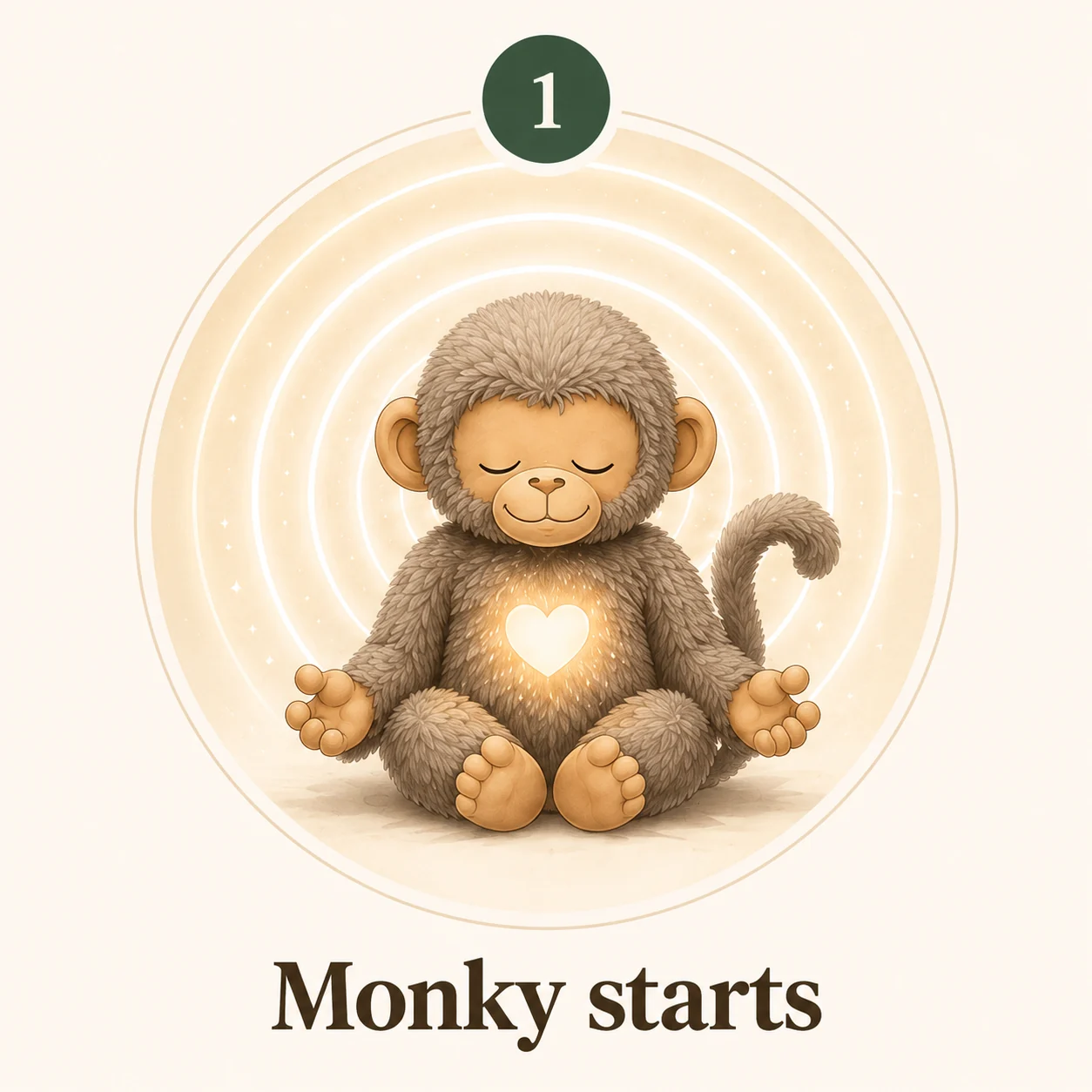
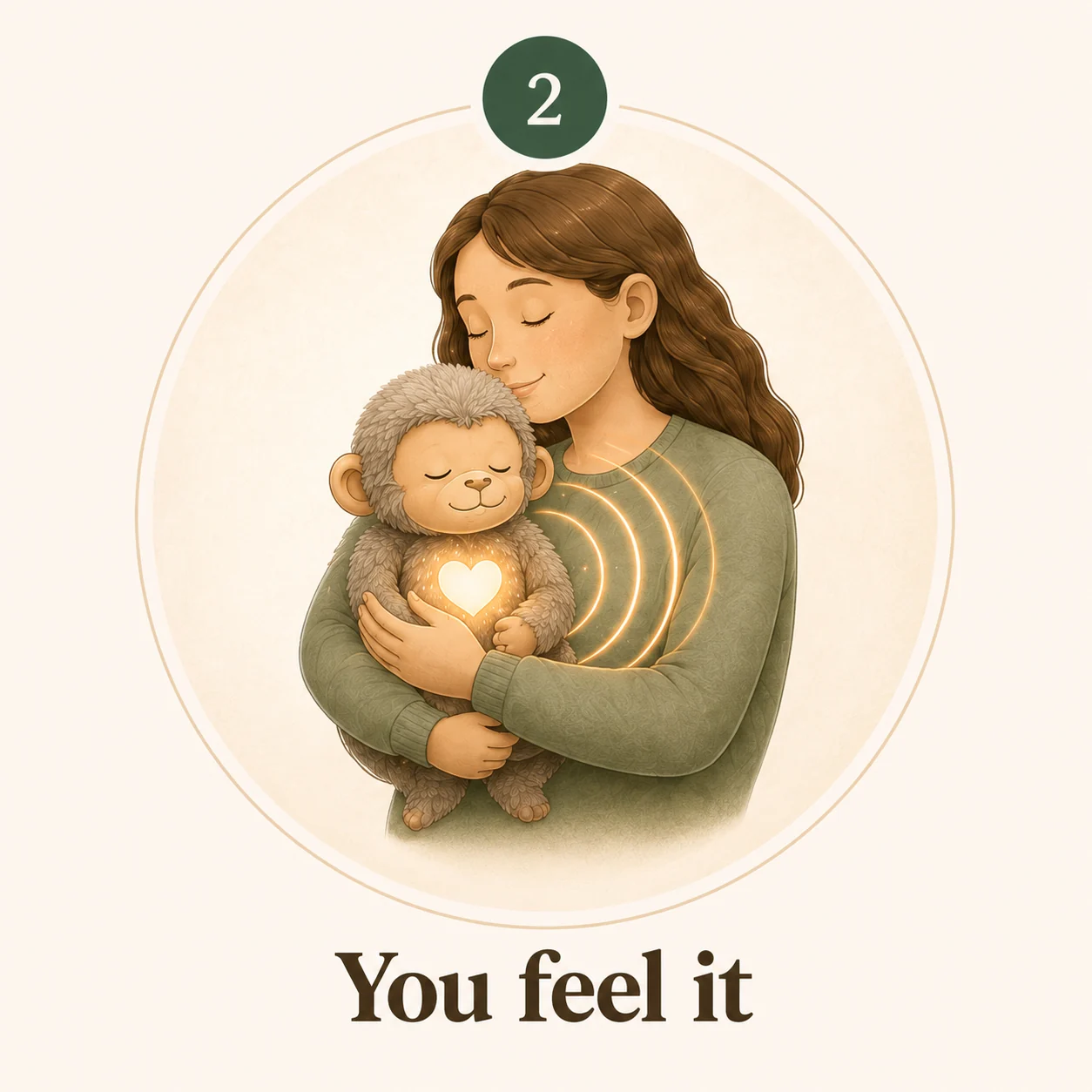
Inside Monky, low-frequency sound becomes soft movement beneath the plush, a felt rhythm designed to help the body wind down.
One rhythm invites another.
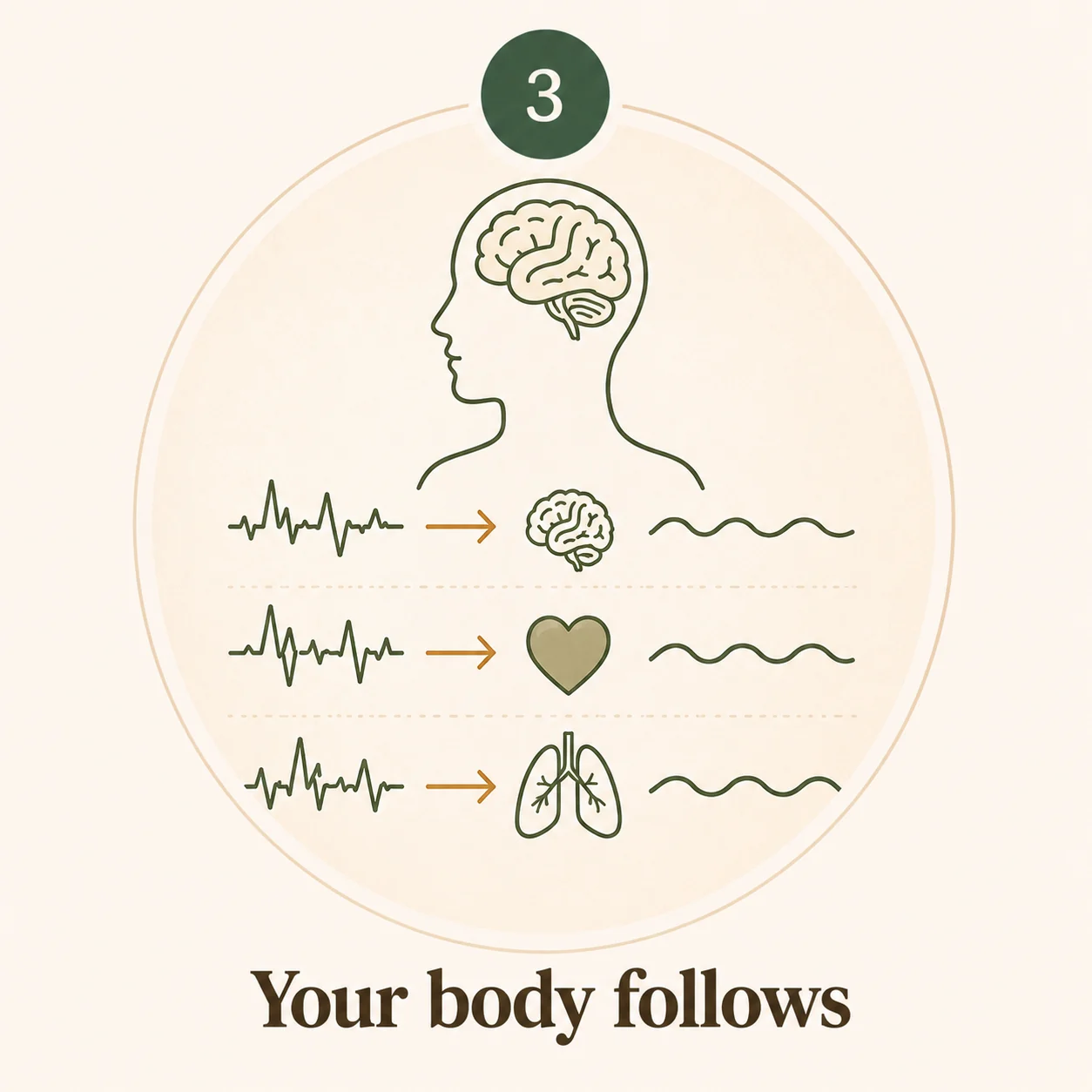
Monky sets a slow, steady rhythm, and the body, drawn to follow, gradually settles into the same calm.
- Turn it on
- Hold it close
- Your body follows
- Rest comes easier


Calm, by design.
Felt, not loud
The room stays quiet. The rhythm stays close.
Steady feels safe
A predictable cue gives the body less to react to.
Something to follow
Attention lands on the rhythm instead of the next thought.

Choose the rhythm for the moment.
Each mode is tuned toward the brainwave range the body naturally settles into for that state: slower for rest, a little quicker for calm attention.
Relax
Alpha · 8–12 HzFor winding down. Alpha is the calm, idling rhythm of a relaxed, awake mind.
Sleep
Delta · 0.5–4 HzFor bedtime. Delta is the slow, deep rhythm the brain follows in its most restful sleep.
Focus
Beta · 13–30 HzFor quiet attention. Beta is the steady, alert rhythm of calm, focused attention.

Different ages. Same nervous system.
A steady rhythm gives the body something simple and predictable to settle into, whether the day was filled with play or responsibility.
From playtime to bedtime.
A familiar vibration becomes part of the nightly routine, helping the body recognize that it is time to slow down.
From a busy mind to a quieter body.

When the day is over but the body is still carrying it, a steady vibration offers one simple sensation to settle around.

Promising research. Careful claims.
Low-frequency sound and vibration have been studied for relaxation, stress reduction, heart-rate variability, and sensory regulation. Monky draws from this research, but it is not a medical device, treatment, or guarantee of sleep.
View references
About alpha, theta & delta brainwaves
Alpha, theta, and delta are brainwave patterns associated with relaxation, drifting off, and deeper sleep. Monky's low-frequency patterns are inspired by these slower states, but do not force the brain into them.
References & sources
- A Scientific Review: Investigating Claims of Therapeutic Efficacy through Low-Frequency Sound Vibration.
- Moore, J., Farquharson, K., & Lotter, C. (2025). "Grooving in My Body": A Mixed-Methods Pilot Study of Vibroacoustic Therapy's Effects on Emotion Regulation and Attention in Autistic Children.